Brush and broadleaf weeds take over pasture faster than most people expect. Triclopyr 4 is a triclopyr ester at 4 pounds of acid equivalent per gallon, built to control woody plants and annual and perennial broadleaves while established grasses stay in place. You clear the brush without starting over on the pasture.
It works two ways. Foliar treatments are diluted with water or mixed as an oil-water emulsion for sprayed leaves, and basal treatments use an oil mixture on woody stems. Aerial application is allowed on rangeland, pasture and conservation reserve acres.
Highlights
- Triclopyr BEE, 4 lb acid equivalent per gallon
- Controls woody plants and annual and perennial broadleaf weeds
- Established grasses tolerate it
- Foliar and basal treatment options
| Formulation | Ester (triclopyr butoxyethyl ester 61.6%) |
|---|
| Use | Herbicide for woody plants and annual and perennial broadleaf weeds |
|---|
| Application | Foliar and basal treatments |
|---|
| Retreatment interval | 28 days |
|---|
| Contains | Petroleum distillates |
|---|
| EPA Reg. No. | 81927-11 |
|---|
Why choose a triclopyr ester for brush
Brush that keeps coming back along a fence row or ditch bank is the job this product is for. The approved sites include forests, pasture, rangeland, rights-of-way, non-crop areas, fence rows and the area around farm buildings.
Common jobs are clearing a fence row, cutting brush out of pasture, keeping a pipeline or power line right-of-way clear, and opening wildlife areas. It suits a cattle operation, a timber or wildlife landowner, and a farm that needs brush out of grass for hay. Plan around the 14-day hay wait covered below.
How to use it
Read and follow the full directions, and match the method to the target. Foliar sprays suit leafy brush and broadleaf weeds. Basal oil mixtures suit woody stems. Rates depend on the site, the brush height and how dense the stand is.
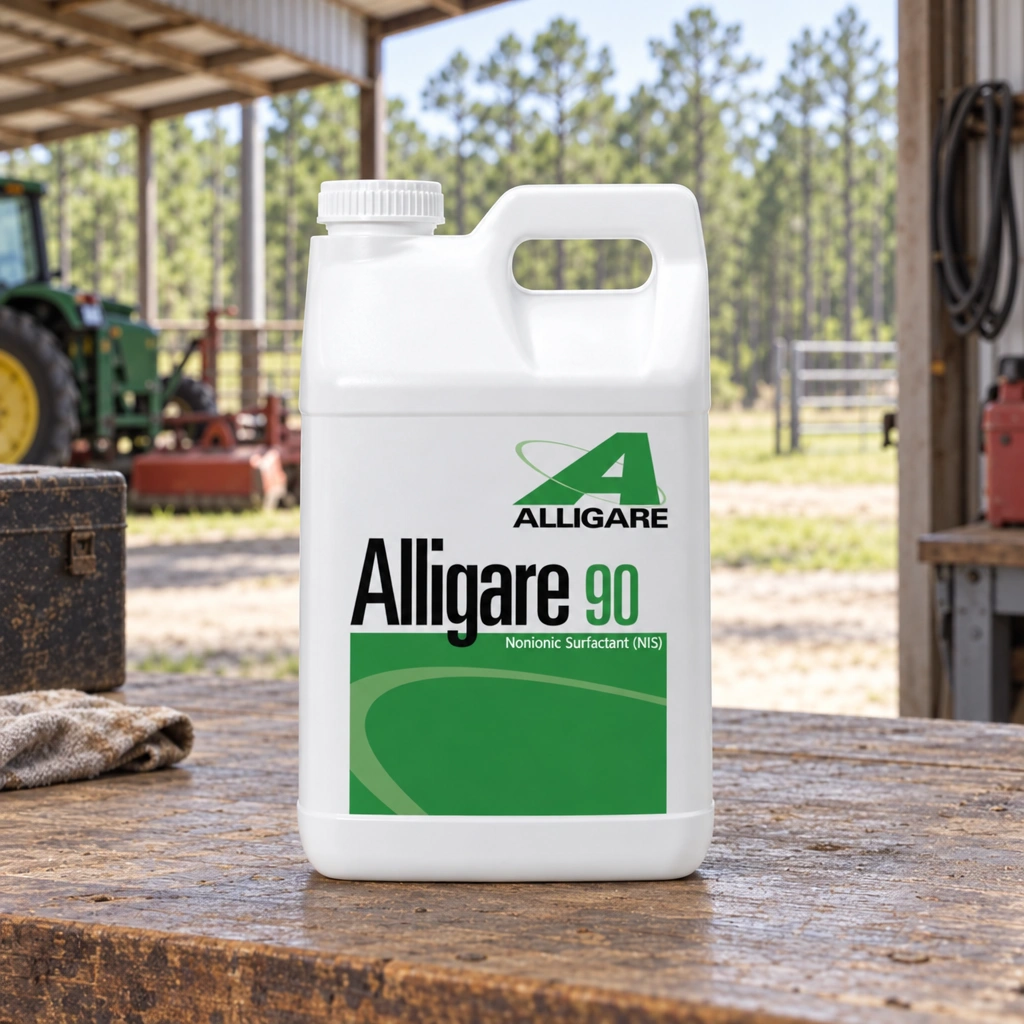
- Foliar: dilute with water or make an oil-water emulsion. A standard agricultural surfactant, if used, goes in at 1 to 2 quarts per acre.
- Basal: add the product to the required oil in the tank and mix thoroughly. Reagitate if the mixture stands more than 4 hours.
- Pasture and rangeland: no more than 2 quarts per acre per year, and no more than 2 quarts per acre per application.
- Wait at least 28 days between treatments on any site. Do not spray when wind exceeds 15 mph.
Good to know
- Treated plants can hold the product for more than 30 days. For 30 days after application, do not sell or move treated plant material, grass clippings, or manure from animals that grazed treated plants off-site for compost, mulch, bedding or feed.
- Do not harvest hay for 14 days after application. Withdraw livestock from treated grass or hay at least 3 days before slaughter.
- It may injure bahiagrass, bentgrass, bermudagrass, centipedegrass, St. Augustinegrass and zoysiagrass. Keep it off golf course greens.
About Alligare
Alligare was founded in 2002 and makes herbicides for vegetation management. Over more than 20 years the company has built its line around that work.
Cautions
KEEP OUT OF REACH OF CHILDREN
CAUTION: Harmful if swallowed. Causes moderate eye irritation. Avoid contact with eyes or clothing. Prolonged or frequently repeated skin contact may cause allergic reactions in some individuals.
This pesticide is toxic to fish and aquatic invertebrates. Do not apply directly to water, to areas where surface water is present, or to intertidal areas below the mean high water mark. Do not contaminate water when cleaning equipment or disposing of equipment washwaters or rinsate.
Do not harvest hay for 14 days after application.
Grazing Lactating Dairy Animals: Do not allow lactating dairy animals to graze treated areas until the next growing season following application of this product.
Clear the brush while the stems are still small enough to reach, and stock up before brush season starts.


 Ask Daisy